By Thelowinterest
28 May, 2026
How to Get an Instant Personal Loan for Medical Emergency in India
By The Low Interest / Emergency Loan / July 2026
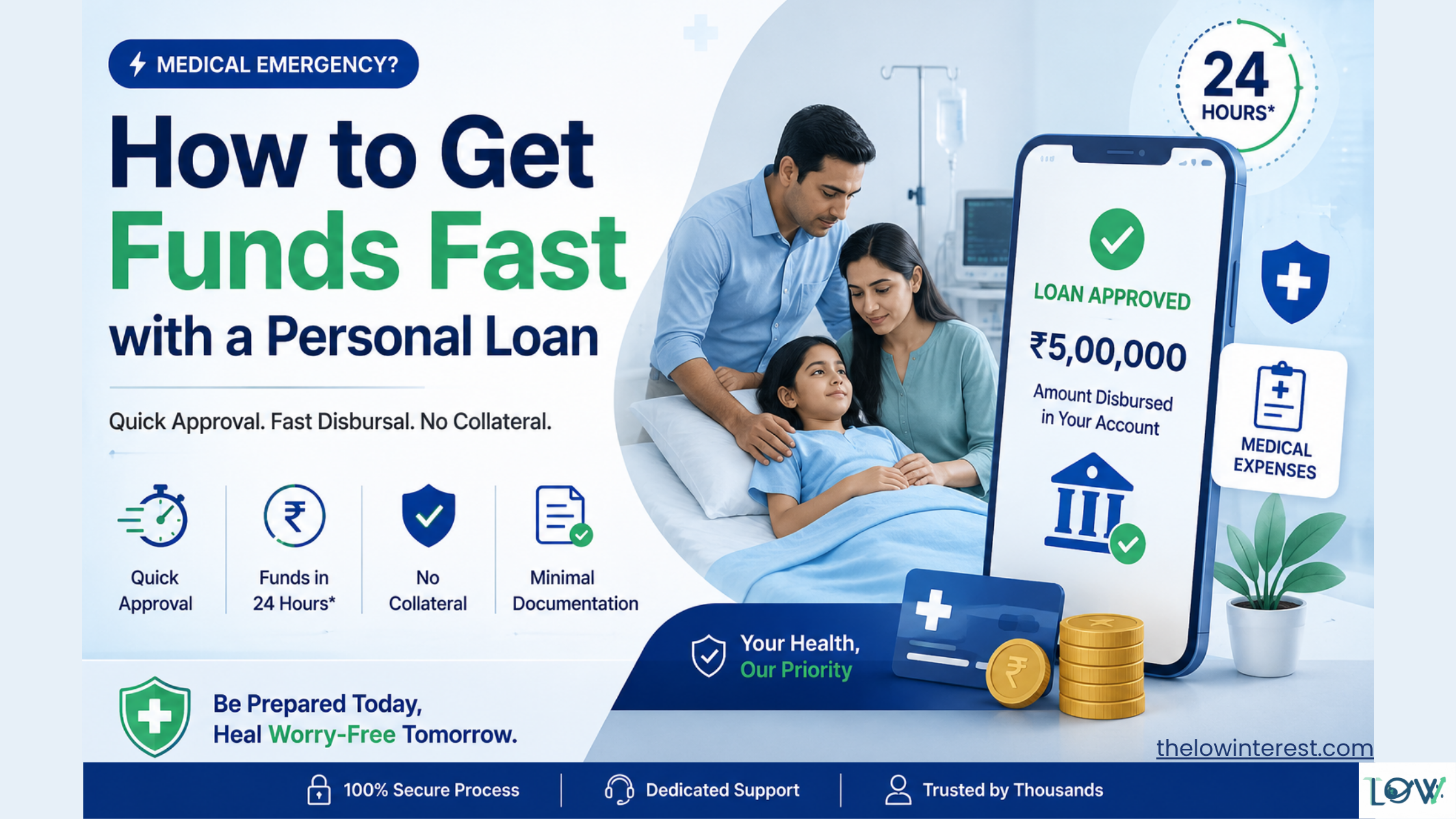
Medical emergencies arrive without warning — and the financial pressure that follows can be as overwhelming as the health crisis itself. Hospital deposits, surgery costs, ICU charges, and medication bills can run into lakhs within days. A personal loan for medical emergency is often the fastest and most accessible way to cover these costs without liquidating savings or investments.
Why a Personal Loan Works Well for Medical Emergencies
• Disbursed in 24–48 hours — sometimes within hours — after document verification.
• No collateral required — your health should be the focus, not pledging assets under pressure.
• Flexible loan amounts from ₹50,000 to ₹40 lakh to match actual hospital bills.
• No restrictions on how the funds are used — covers hospitalisation, surgery, medicines, or caretaker costs.
• Simple online application that a family member can complete on behalf of the patient.
Top Lenders for Medical Emergency Personal Loans
Lender | Disbursal Speed | Interest Rate | Loan Amount |
HDFC Bank | Same day (existing customers) | 10.5%+ p.a. | Up to ₹40 lakh |
ICICI Bank | 24 hours | 10.75%+ p.a. | Up to ₹50 lakh |
Bajaj Finserv | Same day | 11%+ p.a. | Up to ₹35 lakh |
KreditBee | Within hours | 16%+ p.a. | Up to ₹5 lakh |
Poonawalla Fincorp | 24 hours | 9.99%+ p.a. | Up to ₹50 lakh |
Step-by-Step: Applying for a Medical Emergency Loan
1. Have a family member check your pre-approved offers on your existing bank's app — these require zero additional documents.
2. If no pre-approved offer exists, visit TheLowInterest.com and compare emergency loan options from multiple lenders simultaneously.
3. Keep scanned copies of Aadhaar, PAN, latest salary slip or bank statement ready — digital uploads take under 5 minutes.
4. choose lender who provides fastest disbursal which matches with required amount — speed matters more in emergencies.
5. Complete e-KYC and digitally sign the loan agreement — funds are transferred directly to your bank account.
TIP: Important: Many hospitals accept a loan sanction letter before actual disbursal for deposit purposes. Ask your lender for a sanction letter immediately after approval — you can begin treatment before the funds actually arrive. |
FAQ
Q: Can I apply for a medical loan if my credit score is low?
A: Yes. In genuine emergencies, NBFCs like KreditBee, CASHe, and MoneyTap consider applications with CIBIL scores as low as 600–650, particularly for smaller amounts. Some lenders also offer loans against your existing health insurance policy or fixed deposits.
Q: Should I use a personal loan or a medical insurance claim for hospital bills?
A: Both — ideally. Use health insurance for the covered portion and a personal loan for the gap between actual costs and insurance coverage. Many hospitals have a cashless insurance facility for network hospitals, so check your insurer's hospital network first.
CONCLUSION
Navigating a sudden health crisis is deeply stressful, but securing emergency medical funding does not have to be.
By choosing an instant personal loan, you ensure that high hospital bills do not stand in the way of critical treatment.
With competitive digital options available across India, you can balance urgent cash requirements without depleting your hard-earned savings.
At TheLowInterest.com, we prioritize your peace of mind by streamlining the lender comparison process during vital moments.
Our automated system highlights the fastest disbursal options and helps you secure instant digital sanction letters with ease.
Take proactive control of your medical expenses today by discovering pre-approved emergency loans tailored to your financial profile.


.png)

.png)
.png)