By LowIntrestloans
11 Nov, 2026
Finance Influencers in India: Who to Trust in 2026 (and Who to Avoid)
Open Instagram or YouTube and you will find someone promising to double your money by next month. Finance influencers in India now shape how millions of people think about SIPs, stocks, loans and insurance. Some teach real, useful basics. Others sell tips, and a few have been penalised by the regulator.
I’mI’m Poonam Bhagat, the Pune-based creator behind FinTech Poonam, where I teach personal finance in simple Hindi. In this guide I’ll explain how finfluencers work, what SEBI’s rules allow, and how to check any creator, including me, before you act on what they say.

Quick answer: A finance influencer in India is a creator who talks about money, investing or markets. Under SEBI rules, they can educate, but they generally cannot give buy/sell recommendations or promise returns unless they are SEBI-registered. Always verify the registration number before acting on any specific tip.
What Is a Finance Influencer (Finfluencer)?
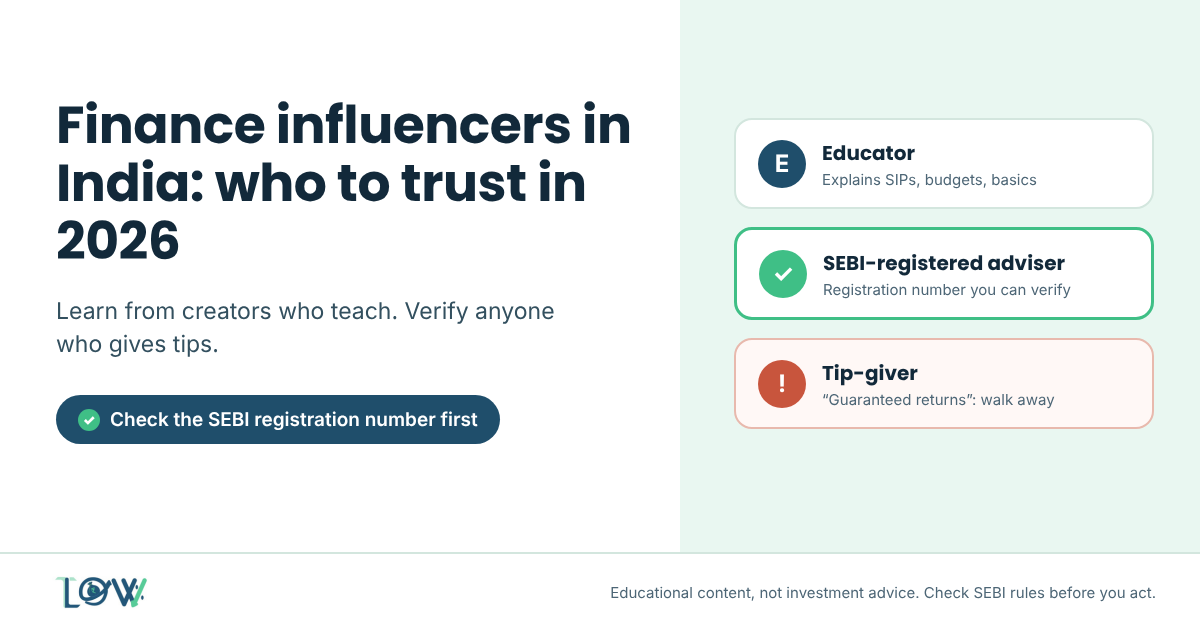
A finfluencer builds an audience around personal finance, mutual funds, trading, insurance or tax. They post on YouTube, Instagram, X, Telegram and LinkedIn. They fall into three groups:
- Educators explain concepts like SIPs, emergency funds and how UPI and digital payments work.
- Registered advisers (RIAs and Research Analysts) are licensed by SEBI and can legally give personalised advice or research recommendations.
- Tip-givers share “calls” and “targets” without registration. This is the risky group.
Why Finance Influencers in India Became So Popular
Cheap mobile data, a surge in demat accounts and little money education in schools created a gap. Many people prefer a creator who explains things in their own language over a bank brochure full of jargon.
That is also why Hindi finance content matters. A large share of first-time investors think and search in Hindi, and they are the ones most at risk from confusing or misleading advice. The influence is real: a SEBI investor survey, as reported by the media, found that around 62% of investors make some investment decisions based on finfluencer recommendations.
What SEBI Rules Say About Finfluencers
SEBI regulates intermediaries, so many rules work by restricting what registered entities can do with unregistered influencers. Based on public reporting:
- Registered entities have been barred from associating with unregistered finfluencers.
- Investor education is allowed. Creators who only teach, with no recommendations or return claims, can operate without registration.
- Enforcement is real. SEBI has had large numbers of misleading posts removed and has acted against several unregistered “gurus.”
- Disclosure is tightening. SEBI-regulated entities must show their registered name and number on social content.
- Ad rules may change. In June 2026, SEBI proposed a Common Advertisement Code that could treat large-following finfluencers like celebrities for financial ads. It was a consultation proposal, so check SEBI’s official website for its current status.
Educator vs. Advisor: The Difference That Protects Your Money

An educator saying “here is how a SIP works” is doing education. Someone saying “buy this stock tomorrow, target ₹500” without registration is a red flag. FinTech Poonam is built as an education brand: we explain how things work (banking, digital payments, mutual funds, SIPs, insurance, loans and tax) so you can decide for yourself. “FinTech Poonam is for education only and does not give buy/sell recommendations.”
The 7-Point Checklist to Verify Any Finfluencer

- Check the SEBI registration number on SEBI’s official intermediary search, not just the creator’s bio.
- Look for return guarantees. “Guaranteed 10% a month” is a warning sign.
- Watch for urgency. “Join in the next 10 minutes” is a sales tactic.
- Find the disclosure. Are paid promotions and affiliate links stated clearly?
- Be wary of paid Telegram or WhatsApp groups selling “premium calls.”
- Cross-check facts against AMFI, NSE or SEBI’s investor site.
- Ask who benefits. If they earn only when you trade, they are not neutral.
Red Flags vs. Green Flags
Red flags: guaranteed profits, screenshots of only winning trades, pressure to open a specific broker account, no registration number, deleted questions in the comments.
Green flags: honest talk about risk and losses, principles you can verify, disclosed sponsorships, and a reminder to consult a registered adviser for personal decisions.
How to Learn Money the Safe Way (Start Here)
Use creators like a classroom, not a doctor. Learn the words, then verify. Here is a simple path:
- Basics first: read How to Start a SIP in India and Mutual Funds for Beginners.
- Everyday money: UPI, banking and digital payments explained and Loans and interest rates in simple Hindi.
- Go deeper: join the structured Shuru courses, which take you from zero to confident, step by step, with no tips and no hype.
- Need personal advice? Read How to Choose a SEBI-Registered Adviser.
- Stay updated: follow FinTech Poonam on YouTube and Instagram.
Frequently Asked Questions
Who are the best finance influencers in India?
“Best” depends on your goal. Look for creators who teach principles, disclose risks and sponsorships, and can be verified. Follower count is not proof of skill.
Who is FinTech Poonam?
FinTech Poonam is the Hindi-first finance education brand of Poonam Bhagat, a Pune-based creator who explains banking, digital payments, mutual funds, SIPs, insurance, loans, tax and investing in simple language.
Are finfluencers legal in India?
Yes, with limits. They can provide investor education. Specific investment advice or return claims without SEBI registration can violate the rules.
How do I check if a finfluencer is SEBI-registered?
Search their name or registration number in SEBI’s official intermediary directory at sebi.gov.in.
Can I trust stock tips from Instagram or Telegram?
Treat them as unverified. Many unregistered tip channels have been targeted by SEBI.
Which Shuru course should I start with?
[Add one line about your beginner course, e.g., “Start with the SIP and mutual fund basics course.”]
Final Thoughts
Finance influencers in India can make money feel less scary, but a big following is not proof of honesty. Use creators to learn, official sources to verify, and a registered adviser to decide. If someone sells certainty in an uncertain market, walk away. If you want clear, hype-free money lessons in Hindi, start with the Shuru courses and our free blog guides.
Disclaimer: This article is for education only and is not investment advice. Investments are subject to market risks. Verify the latest SEBI regulations before acting.