By Low Intrest Loans
16 Nov, 2026
Fintech Affiliate Programs in India: A Complete Guide for Finance Creators (2026)
If you make videos about money, you have probably been asked the same question many times: “Which app are you using?” That question is where a fintech affiliate program in India starts. A brand gives you a tracked link, your viewer signs up through it, and you earn when that signup turns into something real. It might be an account, an install or an approved application.
This guide explains how these programs work, how creators get paid, what brands check before picking a partner, and which rules you need to follow. It is written for YouTubers, Instagram creators, Shorts creators, CAs and anyone who teaches money in plain language.
The short answer
A fintech affiliate program pays you for sending interested users to a financial product through your own unique link. Payment usually depends on a result, such as a lead, an app install, an approved application or a share of revenue. You can join programs for investing apps, credit cards, loans, insurance, accounting tools and budgeting apps. In India, you must also disclose every paid promotion clearly and avoid promising returns.
What is a fintech affiliate program?
Think of it as a referral system with proper tracking. You do not get paid for views alone. You get paid when your audience takes the action the brand wants.
Here is a simple example. You make a video on “how to improve your CIBIL score”. In the description you add a tracked link to a credit score checking page. A viewer clicks it and checks their score. The brand sees that the visit came from your link, so it credits you.
This is why finance affiliate programs are popular with creators who already have a trusting audience. Finance viewers are searching with a purpose. They want to apply, compare or fix something. That intent is worth more to a brand than a casual click.
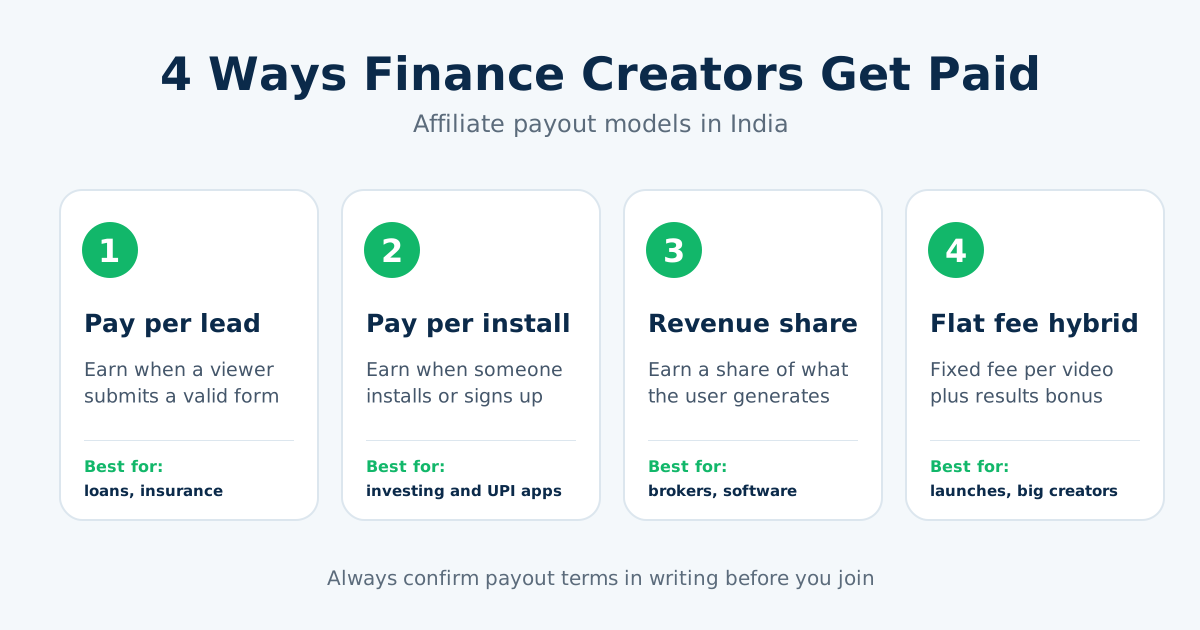
How you get paid: the four common models
| Model | How it works | Best for |
|---|
| Pay per lead | You earn when a viewer submits a valid form or enquiry | Loans, insurance, credit cards |
| Pay per install or signup | You earn when someone installs the app or opens an account | Investing apps, UPI and budgeting apps |
| Revenue share | You get a share of what the user generates over time | Brokers, subscription tools, accounting software |
| Flat fee or hybrid | A fixed payment for a video, plus a bonus for results | Larger creators and product launches |
The exact amount differs by brand, product and your audience, so ask for the payout terms in writing before you start. Also ask when payments are made, what counts as a valid conversion, and how long a click stays valid after someone taps your link.
Which types of programs can a finance creator join?
Investing and trading. An investing app affiliate program or a demat account referral program pays when a new user opens an account. Brands here are strict about compliance, so keep your content educational.
Credit cards and banking. A credit card affiliate program pays when a viewer’s application is approved. Comparison videos like “best card for fuel” or “lifetime free cards” work well. You can browse the cards available on our credit card page.
Loans. A loan lead generation partner model rewards creators who explain borrowing honestly, such as EMIs, eligibility and interest rates. Our personal loan page shows the type of products viewers compare.
Insurance. An insurance affiliate India program works best with simple explainers like term vs health cover. See our insurance page for the categories.
Accounting and tax tools. CAs and small business creators can partner with GST, invoicing and bookkeeping software. These are usually tutorial-driven and easy to demonstrate on screen.
What brands look for in a creator
Many creators think brands only count subscribers. In practice, a brand usually checks these things first:
- Audience location and age. Is your audience in India, and is it the right age group for the product?
- Engagement. Real comments, saves and watch time matter more than a big number.
- Trust. Do your viewers ask for your opinion and act on it?
- Topic fit. A creator who teaches budgeting is a better match for a budgeting app than a general entertainment channel.
- Clean history. No “guaranteed profit” claims, no misleading titles.
A small channel with an engaged audience can beat a bigger one with passive viewers. If your comments often say “which app is this?” or “how do I apply?”, tell brands about it in your pitch. That is a strong signal.
How to join a fintech affiliate program: step by step
- Pick your lane. Choose one or two categories that match your content, such as loans and credit scores, or investing basics.
- Check your numbers. Note your average views, audience country, and your best performing money videos from the last 90 days.
- Build a simple media kit. One page with your channel links, topics, audience details and contact email is enough.
- Apply to programs. Use the creator partnership page of each brand, or email them directly. You can see how our own creator collaboration works on the Work With Fintech Poonam page.
- Test with one video. Place your link in the description and pinned comment, mention it naturally in the video, and track the results for 30 days.

If you are newer to personal finance content, our free personal finance course in Hindi is a good way to sharpen your explanations before you promote any product.
The rules you must follow in India
This is the section many creators skip, and it is the one that protects your channel.
1. Disclose every paid or affiliate promotion. The Advertising Standards Council of India (ASCI) requires influencers to clearly label ads where there is a material connection with a brand. Labels like #ad, #sponsored or #partnership should be visible, and a general line in your bio is not accepted as a replacement for labelling each post. ASCI has also published additional guidance for health and finance influencers. Read the latest rules on the ASCI website.
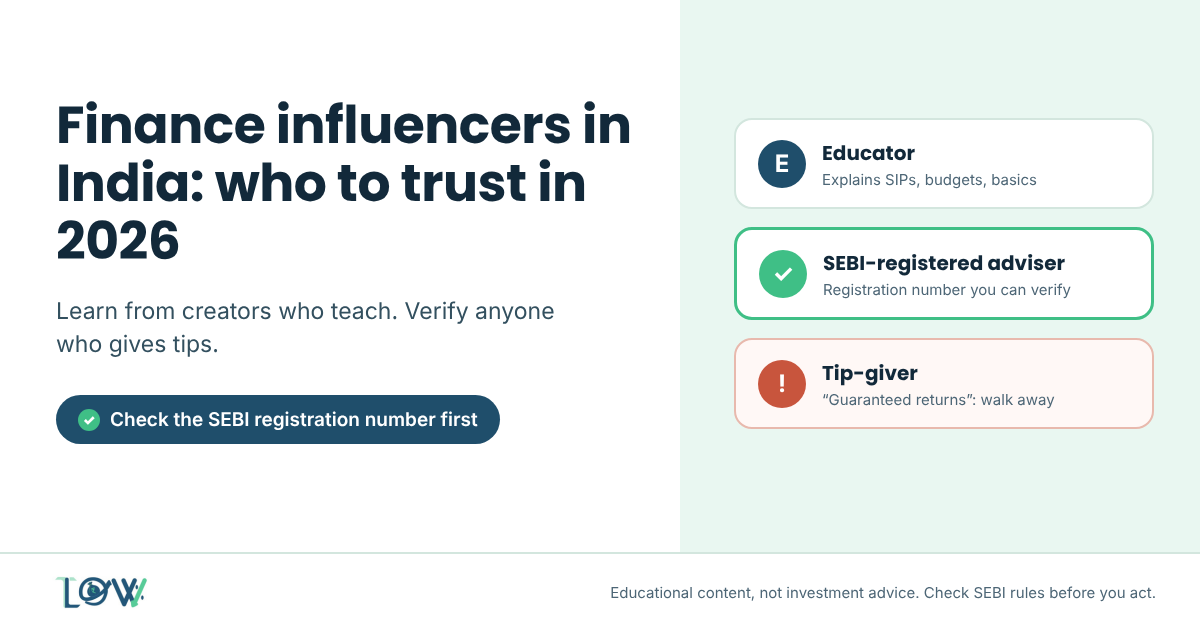
2. Be careful with investing content. SEBI restricts SEBI-regulated entities from associating with unregistered people who give investment advice or claim returns on securities. Practically, this means brokers and mutual fund platforms may avoid creators who say things like “this stock will double”. Teach the concept, explain the risk, and do not give tips. Check the current circulars on the SEBI website.
3. Never promise outcomes. Avoid “guaranteed approval”, “zero risk” or “get rich fast”. Say “eligibility depends on the lender” instead.
4. Keep the risk note. For loans, credit cards, investing and insurance, add a line that terms and approval are decided by the lender or provider.
[ADD IMAGE 4 HERE: say this / don’t say this graphic]
This is general information, not legal advice. Rules change, so confirm the latest circulars or speak to a qualified advisor before you publish.
Common mistakes finance creators make
- Joining too many programs and promoting products they have never used
- Hiding the link in a long description with no mention in the video
- Skipping the disclosure label
- Choosing a program only for the highest payout, then losing audience trust
- Not asking about payout timing, tracking window and what counts as a valid conversion
A simple content idea for each product type
- Loans: “How to compare personal loan interest rates before you apply” (pair with our EMI calculator)
- Credit score: “How to check and improve your CIBIL score” (point to the CIBIL score page)
- Investing: “SIP vs FD for beginners: what to choose first” (see our investments page)
- Credit cards: “3 lifetime free cards and who should skip them”
- Insurance: “Term plan mistakes people make in their 30s”
Work with The Low Interest
The Low Interest is a Pune-based platform that helps people compare loans, credit cards and insurance, and check their CIBIL score. Our channel, Fintech Poonam, focuses on simple money education. If you create finance content and want to collaborate or become a partner, start with the Work With Fintech Poonam page or reach us through Contact Us.
Frequently asked questions
What is a fintech affiliate program in India?
It is a partnership where a fintech or financial brand gives you a tracked link and pays you when a viewer you refer completes an action, such as a signup, install, lead or approved application.
How do finance creators make money from affiliate programs?
They earn per lead, per install, as a revenue share, or through a flat fee with a performance bonus. Payment depends on the brand and the product.
Do I need a big channel to join?
No. Many brands work with smaller creators if the audience is engaged, based in India and interested in finance. Engagement and trust usually matter more than subscriber count.
Is affiliate income taxable in India?
Yes, creator income is generally taxable. Keep records of payments and speak to a CA about how to report it.
Do I have to disclose affiliate links?
Yes. ASCI guidelines require clear disclosure of paid or affiliate promotions on each post or video, and a bio line alone is not enough.
Can I promote stocks or mutual funds as an affiliate?
You can create educational content, but SEBI rules restrict regulated entities from associating with unregistered people who give recommendations or claim returns. Avoid tips and return promises, and check current SEBI circulars.
How long does it take to earn the first payout?
It depends on the program. Many have a tracking window and a minimum payout, so ask about both before you join.
Final thoughts
A good fintech affiliate program rewards creators who are honest, clear and consistent. Start with one product that fits your content, disclose properly, test it on a single video and look at the data. If your audience responds, grow from there.
Want to collaborate with us? Visit the Work With Fintech Poonam page and share your channel details.
Disclaimer: This article is for education only. It is not financial, legal or tax advice. Loan and card approvals, rates and terms are decided by the lender or provider.