By Techwhizzc
20 Nov, 2026
How to Get Brand Deals as a Finance Creator in India (2026)
Most finance creators don’t lose brand deals because their videos are weak. They lose them because they pitch too early, quote a price with no data behind it, or say something a brand’s legal team can’t go near. If you want to know how to get brand deals as a finance creator in India, here is the honest answer: it is a trust game first and a sales game second.
This guide gives you the process we would follow if we were starting from zero today. It covers what to build before you pitch, how to pitch fintech brands, how affiliate and sponsorship deals differ, what to get in writing, and which rules protect your channel.
The quick answer
To get finance influencer brand deals in India, publish useful money content in one clear niche, track your views and audience data, create a one-page media kit, shortlist brands that fit your topic, and send a short pitch with a specific offer. Disclose every paid post under ASCI rules, and never promise returns or give stock tips, because SEBI rules make regulated brands cautious about those creators.
How to get brand deals as a finance creator in India: 6 steps

Step 1: Build trust before you pitch
Brands will look at your channel before they reply to your email. They scroll your last ten videos, read the comments and check whether your audience believes you.
So start there. Pick one lane, such as credit scores and loans, investing basics, tax for salaried people or small business money. Publish consistently for a couple of months. Answer comments. Admit it when you get something wrong. A finance audience forgives mistakes, but it doesn’t forgive being sold to.
A good test is simple. Do viewers ask, “Which app is this?” or “How do I apply?” That question is the signal brands pay for.
Step 2: Know your numbers
When a brand asks about your reach, “about 20k subscribers” is a weak answer. Pull these instead:
- Average views on your last 10 videos
- Audience country, age and gender (YouTube Studio or Instagram Insights)
- Average watch time or retention
- Comment quality: real questions, not just emojis
- Saves and shares on Reels, and click-through on links you’ve shared before
Views per video matter more than total subscribers. A channel with 12,000 subscribers and steady, engaged viewers can be a better buy than one with 100,000 and a passive audience.
Step 3: Build a finance creator media kit
Your media kit is a single page, or a short PDF, that lets a brand decide quickly. Include:
- Who you are and what you teach, in two lines
- Your platforms and links
- The numbers from Step 2
- Your audience profile
- Two or three of your best finance videos
- Formats you offer (YouTube integration, dedicated video, Reel, Short)
- Your contact email
Keep it honest. Don’t inflate figures. Brands verify them, and one mismatch ends the conversation.
Step 4: Shortlist brands that fit your niche
Don’t pitch everyone. Pick around ten brands that match what you already teach.
| Brand category | What they usually want | Content that fits |
|---|
| Investing apps and brokers | New account signups from beginners | “How to start investing”, platform explainers |
| Credit cards and banks | Approved applications | Card comparisons, “best card for fuel or travel” |
| Loans and lending | Qualified leads | EMI explainers, “how to compare personal loan rates” |
| Insurance | Enquiries and policy leads | Term vs health cover, claim basics |
| Accounting, GST and tax tools | Free trial signups | Tutorials for freelancers and small businesses |
| Budgeting apps and courses | Installs and course signups | Saving habits, first-salary plans |
If you teach CIBIL scores, a lending platform is a natural fit. If you teach GST, an invoicing tool makes sense. Fit gets replies.
Step 5: Pitch with one clear offer
Here is how to pitch fintech brands without sounding like everyone else in their inbox:
- Personalise the first line. Mention a product feature or campaign you’ve actually looked at.
- Make one offer. One video idea, one format and one goal.
- Show proof. Two numbers and one relevant past video.
- Ask for a small next step. A 15-minute call, not a contract.
- Follow up once after five to seven days, then move on.
Here is a short email you can adapt:
Subject: Video idea for [Brand]: how first-time borrowers compare loans
Hi [Name],
I run [channel name], where I explain loans and credit scores in simple Hindi/English to salaried first-time borrowers. My last 10 videos average [X] views, and most viewers are [age group] from [city/region].
I’d like to make a video on “How to compare personal loans before you apply,” showing [Brand’s product] as one of the options. I’d track results through a unique link and share a report after 30 days.
Could we do a quick call this week? My media kit is attached.
Thanks,
[Your name]
The same structure works in an Instagram DM. Just cut it to three lines and link your media kit.
Step 6: Disclose clearly and track results
Add a clear label to every paid or affiliate post. Use a tracked link for each brand so both sides can see what your video produced. After 30 days, send a short report with clicks, signups if the brand shares them, and your top comments.
This step is where one-time deals turn into repeat deals. Brands remember the creator who sends a clean report.
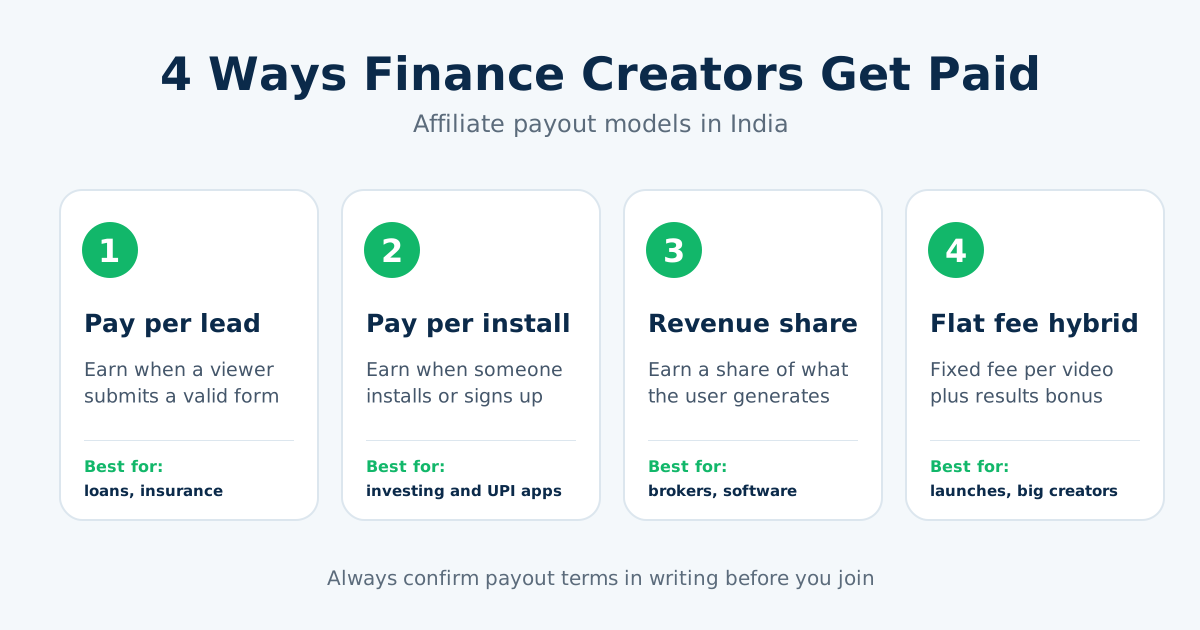
Affiliate vs sponsorship: which deal should a finance creator take?
The two models pay in different ways, and the right one depends on where you are.
| Affiliate / referral | Flat-fee sponsorship | Hybrid |
|---|
| How you’re paid | When viewers complete an action (signup, install, approved application) | A fixed fee for the video or post | A smaller fixed fee plus a bonus for results |
| Risk | On you | On the brand | Shared |
| Best for | New and small channels | Creators with proven engagement | Mid-size creators and launches |
| Watch out for | Short tracking windows, unclear approval rules | Long exclusivity for a small fee | Vague bonus conditions |
If you’re just starting, an affiliate or hybrid deal is easier to win, because the brand pays for results. Once you have two or three campaigns with data, start asking for a fixed fee. Your tracking reports are your proof.
Can small channels get brand deals?
Yes, and brand deals for small finance channels are more common than most creators think. The key is to be specific. A channel with 3,000 subscribers that teaches “credit score repair for first-job salaried people” can be more attractive than a broad channel with ten times the reach, because the audience is easier to define.
What helps a small channel most:
- A tight niche and a consistent upload rhythm
- Comments that show people act on your advice
- A regional-language audience that brands find hard to reach
- A low-risk first offer, such as a trial affiliate link or a single Short
Be realistic about earnings. Early deals may be small. Treat them as proof, not income.
What brands check before they reply
Whether you’re pitching a bank, a broker or a software company, expect them to check:
- Audience fit: country, age and interest match
- Engagement quality: real comments and consistent watch time
- Content safety: no misleading titles, no “guaranteed profit” claims
- Past work: have you promoted products before, and were the videos clear and honest?
- Professionalism: quick replies, a clean media kit, and clear disclosure
Brand deal payment terms and agency commission: what to get in writing
Many creators focus on the fee and skip the contract. That’s where problems start. Before you say yes, make sure these points are written down:
- Payment timeline: the date or number of days after posting, and what happens if it’s late
- Deliverables: exactly what you’ll make, how many revisions are included, and who approves the content
- Usage rights: whether the brand can reuse your video as an ad, and for how long
- Exclusivity: which competitors you can’t promote, for how long, and whether you’re paid for it
- Affiliate terms: what counts as a valid conversion, the tracking window and the payout date
- Cancellation: what you’re paid if the brand cancels after you’ve started
- Agency or manager commission: if someone represents you, agree on their percentage and who pays it before the deal is signed
Ask a CA how to invoice and report the income. A short conversation now saves a long one at tax time.
Finance influencer guidelines in India: ASCI disclosure and SEBI finfluencer rules
This is the section that keeps your channel safe, and it’s what brands in finance read most closely.
ASCI disclosure. The Advertising Standards Council of India (ASCI) expects influencers to make a clear, upfront disclosure whenever they have a paid or material connection with a brand. Label each post, not just your bio, and make the label easy to see. You can read the current rules on the ASCI website.
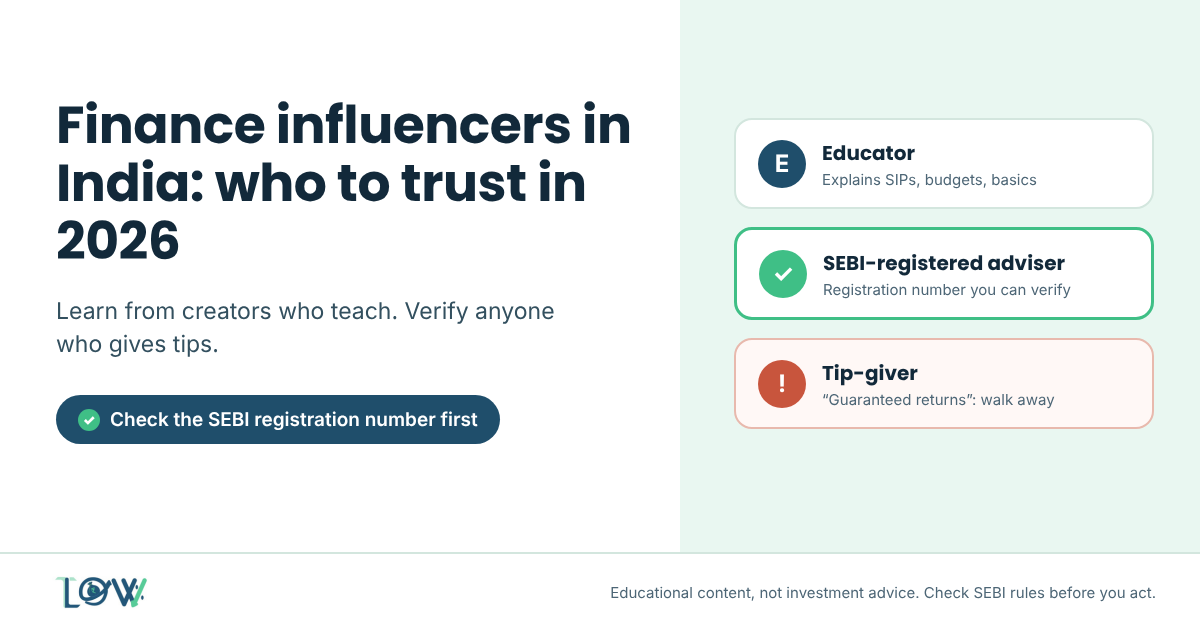
SEBI finfluencer rules. SEBI has told its regulated entities, such as brokers and mutual fund platforms, not to associate with unregistered people who give investment advice or promise returns. In practice, teaching how a SIP works is very different from saying “buy this stock, it will double.” Stick to education, explain the risks, and don’t give tips. Check SEBI’s latest circulars on its official site before working with any investing brand.
Everyday rules that protect you:
- Never promise approval, returns or “zero risk”
- Say that eligibility and terms depend on the lender or provider
- Add a short risk note on investing, loan and insurance content
- Don’t hide the paid link at the bottom of a long description. Mention it in the video too
This is general information, not legal advice. Rules change, so confirm the latest guidance before you publish.
Mistakes that cost finance creators deals
- Pitching before building a body of useful videos
- Quoting a price without any audience data
- Sending the same copy-paste email to 50 brands
- Promoting products you haven’t tried
- Skipping the disclosure label
- Signing long exclusivity for a small fee
- Not following up with a results report
Work with The Low Interest
The Low Interest is a Pune-based platform that helps people compare personal loans, credit cards and insurance and check their credit score. You can read more about us on our About Us page.
If you create finance content and want to collaborate, start on our Work With Fintech Poonam page and use the enquiry form with the “Brand Collaboration” option. If you’re still building your skills, our free personal finance course is a good way to sharpen your explanations before you pitch.
Frequently asked questions
How do I get brand deals as a finance creator in India?
Build trust with useful content in one niche, collect your audience numbers, create a media kit, shortlist brands that match your topic and send a short pitch with one clear offer. Disclose every paid post and avoid return promises or stock tips.
Can small finance channels get brand deals?
Yes. Brands often care more about a specific, engaged audience than a large one. Start with affiliate or hybrid deals, and use the results to ask for a fixed fee later.
How do I pitch fintech brands?
Send a short, personalised email or DM with your audience numbers, one video idea and a request for a quick call. Follow up once after five to seven days.
What is the difference between affiliate and sponsorship deals?
An affiliate deal pays you when viewers complete an action through your link. A sponsorship pays a fixed fee for the video or post. Hybrid deals combine a smaller fee with a performance bonus.
Do I have to disclose paid promotions in India?
Yes. ASCI guidelines expect clear, upfront disclosure of any paid or material connection with a brand. Label each post rather than relying on your bio.
Can I promote stocks or mutual funds?
You can teach concepts, but avoid tips and return claims. SEBI has told its regulated entities not to associate with unregistered people who give investment advice or promise returns, so check the latest circulars first.
What should a finance creator media kit include?
Your niche, platform links, average views, audience details, two or three best videos, the formats you offer and your contact email.
Final thoughts
Learning how to get brand deals as a finance creator in India comes down to doing a few simple things well: build trust, know your numbers, pitch a clear idea, get terms in writing, and follow the disclosure rules. Do that consistently and the deals follow.
Ready to collaborate? Visit our Work With Fintech Poonam page and tell us about your channel.
Disclaimer: This article is for education only and isn’t financial, legal or tax advice. Loan and card approvals, rates and terms are decided by the lender or provider.